Page cover

Installing Software

Server Requirements

The server (or rig – these terms are nearly interchangeable in this context) must be equipped with NVIDIA GPUs, as AMD is currently not supported. The minimum required disk space is 32 GB; for reliability, it's recommended to use an SSD instead of a flash drive. A minimum of 8 GB of RAM is required, but 16 GB will provide greater stability. As for the CPU, the system can work with a Celeron on a 1151 socket, but for more efficient performance, consider using a CPU like the i7-6700.

Before proceeding, it is highly recommended to disable any overclocking, including the Power Limit (PL), and reset the GPUs to factory settings. Afterward, stress-test the system for stability by, for example, testing the GPUs using the kawpow algorithm and loading the CPU. Monitor temperatures and ensure everything is running stably.

If the system operates stably and temperatures are within a safe range, continue to the next step in the instructions. If temperatures are too high or errors occur, address these issues first – for example, by improving cooling or troubleshooting – and ensure stable operation before proceeding.

HiveOS includes its own driver management via the nvidia-driver-update command. For best compatibility with Clore.ai workloads (especially ML/AI), use the following recommended versions:

NVIDIA Drivers

Branch
Version
CUDA Support
Recommended For

R580 (LTSB)

580.126.18

Up to CUDA 12.8

Most GPUs — stable, long-term support until Aug 2028

R590

590.48.01

Up to CUDA 13.1

RTX 50 series (5090/5080), latest features

To install a specific version in HiveOS:

nvidia-driver-update 580.126.18 --force

For RTX 50 series GPUs:

nvidia-driver-update 590.48.01 --force

Important: Do not use nvidia-driver-update --force without specifying a version — it may install an older default driver that doesn't support modern CUDA workloads.

CUDA Toolkit Compatibility

Most renters use Docker images that include their own CUDA runtime, so hosts typically don't need to install the CUDA Toolkit manually. However, the host's NVIDIA driver must support the CUDA version required by the renter's workload.

CUDA Version
Minimum Driver
Status

CUDA 12.4

R550+

Widely used in ML ecosystem

CUDA 12.8

R570+

Latest stable 12.x branch

CUDA 13.1

R590+

Latest, optimized for RTX 50 series

Recommendation: Install R580 LTSB (580.126.18) for broad compatibility with CUDA 12.x workloads. If you host RTX 50 series GPUs, use R590 (590.48.01) for full CUDA 13.x support.

Registering and Adding the Server

1. Go to the websitearrow-up-right, register, log in, and navigate to the marketplace:

2. Adding a Server: There are two ways to add a server:
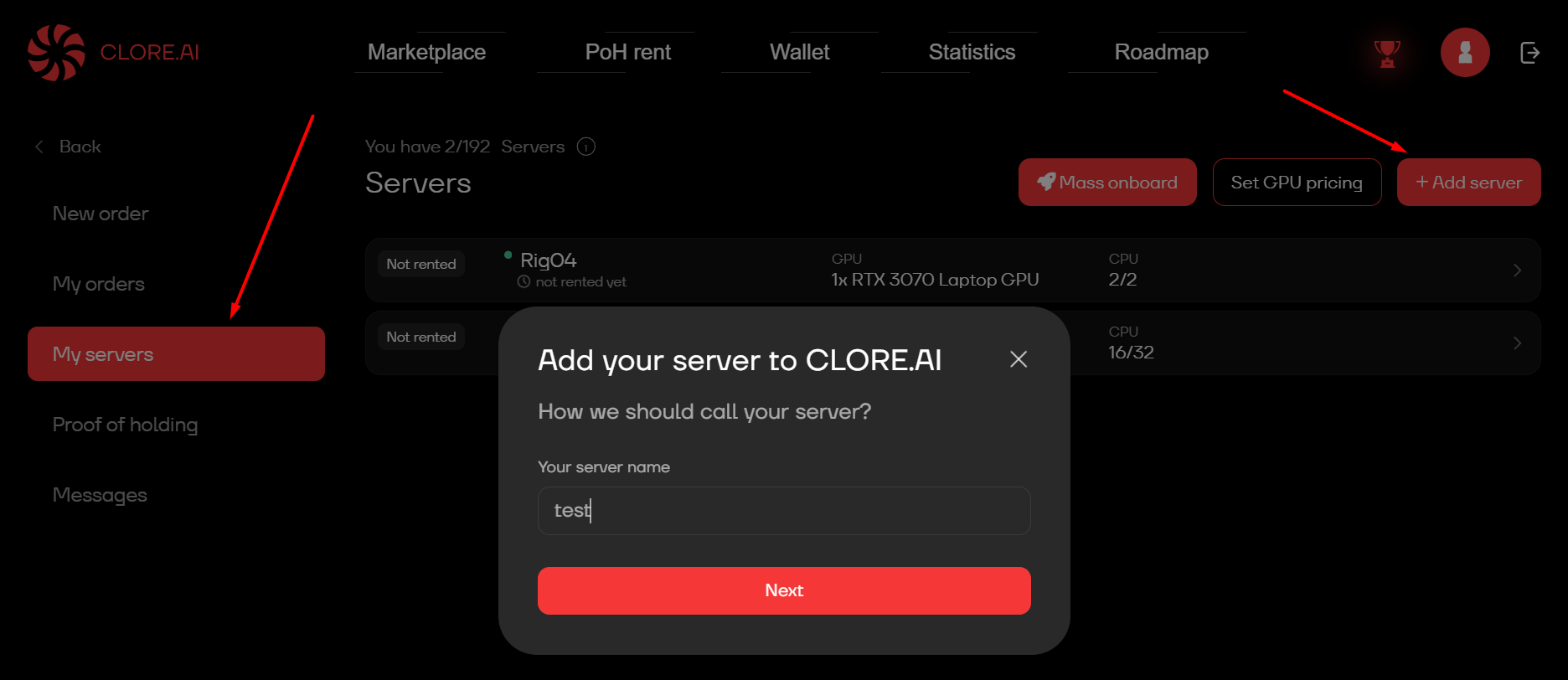
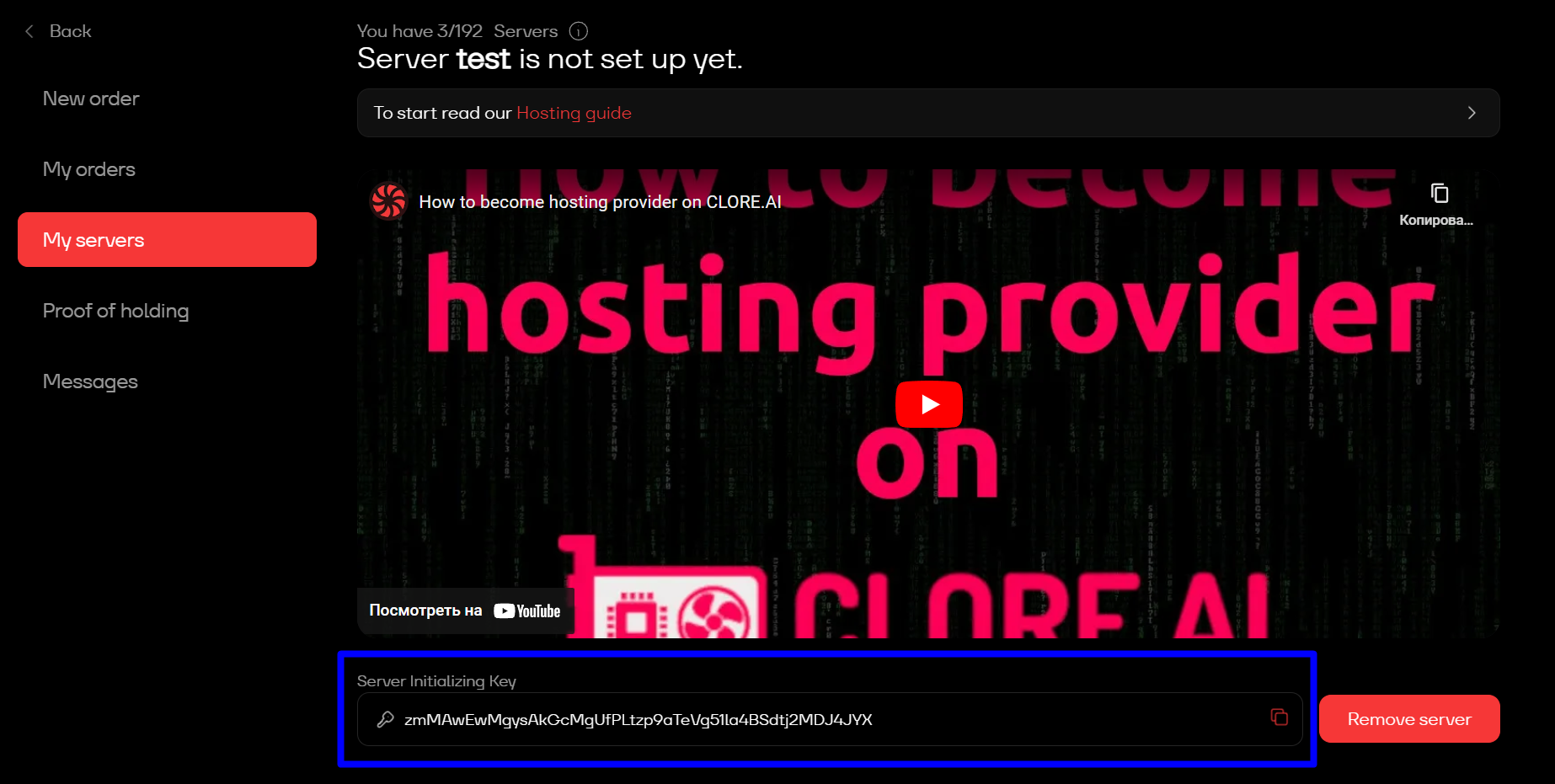
Method 1: Go to the "My Servers" section and click the "+Add Server" button. Enter the server's name and click "Next."

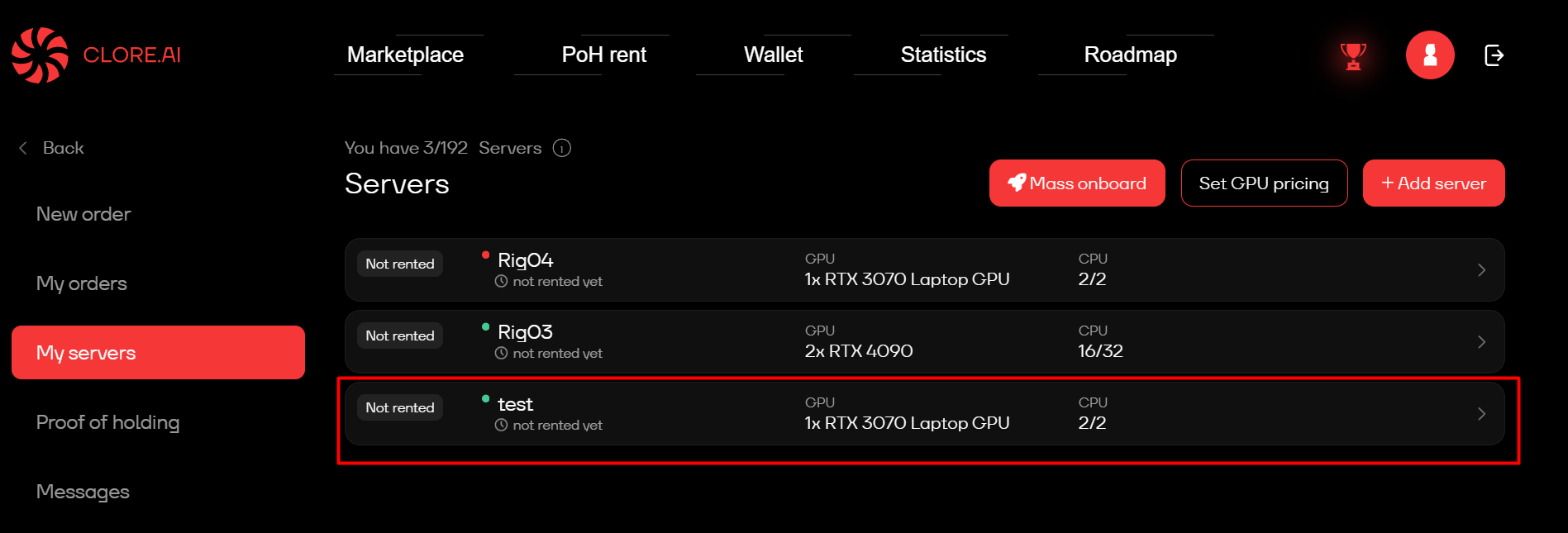
After adding, the server will be marked with a red circle, meaning it is inactive. We will activate it later, but for now, click on the created server to obtain a key – you will need it later.

3. HiveOS Setup:

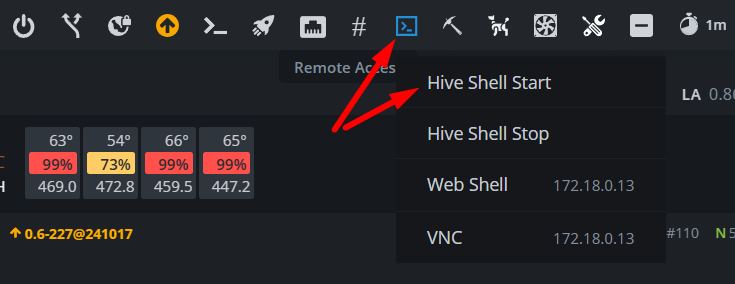
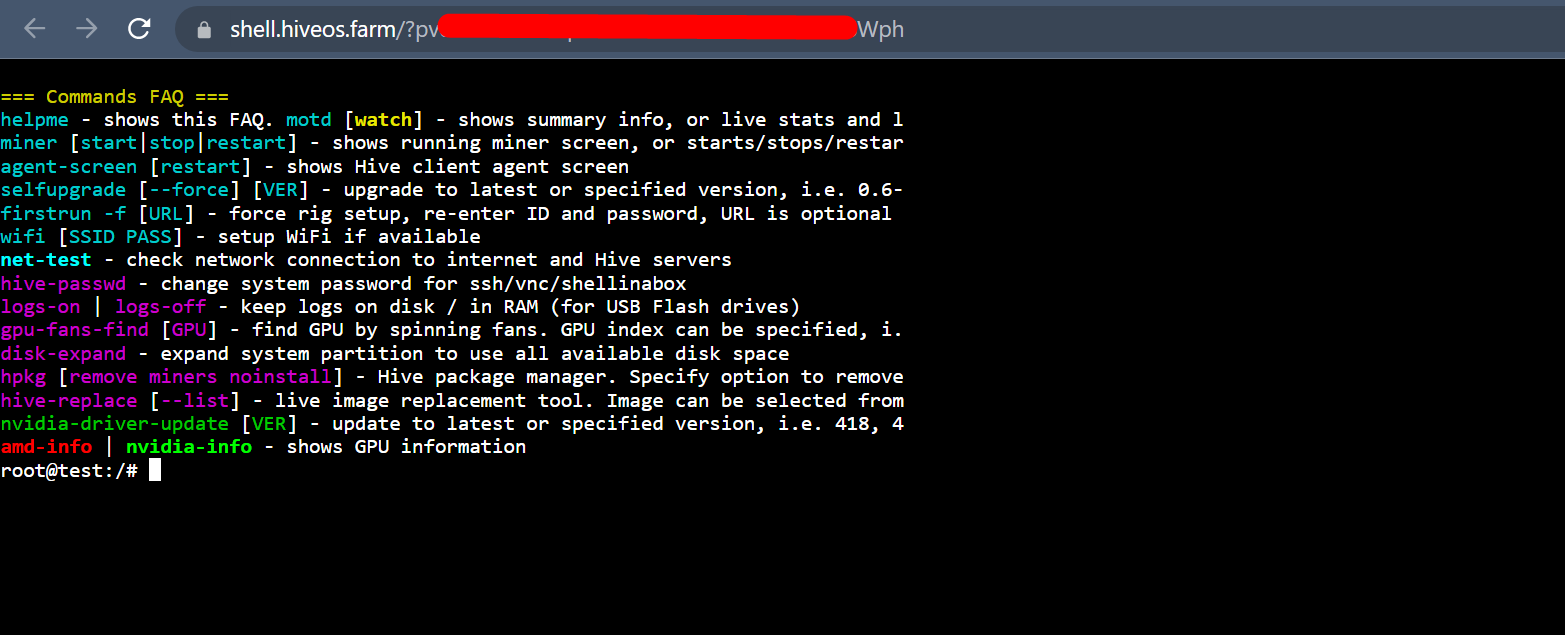
Choose the rig and open Shell. For those who rarely use HiveOS, images have been added below for clarity.

4. HiveOS Update: Run the command:

If HiveOS Disk Space Issues Arise: If there's less free space on the disk than expected after installation or update (e.g., only 20 GB free on a 512 GB disk), execute the following:

  • For M.2:

  • For SATA:

5. Run Updates in Sequence:

6. Update Necessary Drivers:

Tip: To install a specific recommended driver version, use:

For RTX 50 series GPUs, use version 590.48.01 or later.

7. Reboot the Rig:

8. Switch to Superuser Mode:

9. Install the Software:
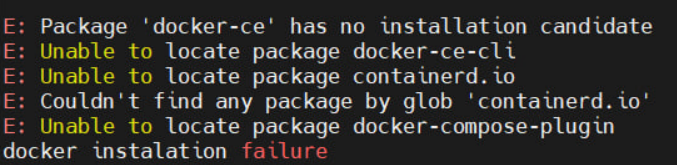
If the system reports that git is missing, install it with:

Then retry the installation.

If you encounter a gpg error, use:

Afterward, rerun the installation.

10. Activate the Server:

Replace <token> with the key obtained earlier.

If an error indicates a missing folder or file, the installation likely didn’t complete correctly, and the clore-hosting folder was not created. In this case, repeat the installation.

11. Finalize reboot:

Restart the rig, wait a moment, and refresh the marketplace page. If everything was set up correctly, the server will be marked with a green circle.

How to Disable All Installed Services

If you need to disable everything previously installed:

  1. Disable the services:

  2. Reboot the system:

How to Re-enable Services

To re-enable the services:

  1. Enable the services:

  2. Reboot the system:

Removing the Previously Installed Token

To delete the token, use the command:

The file containing the token is located at:

Last updated

Was this helpful?